
The Prison Camp Pope
The FallChronicles Clamence's election as pope in a North African prison camp and his moral compromise there.
increasing Bearing strength in each event
 decreasing
Bearing strength in each eventdecreasingWar and Escape
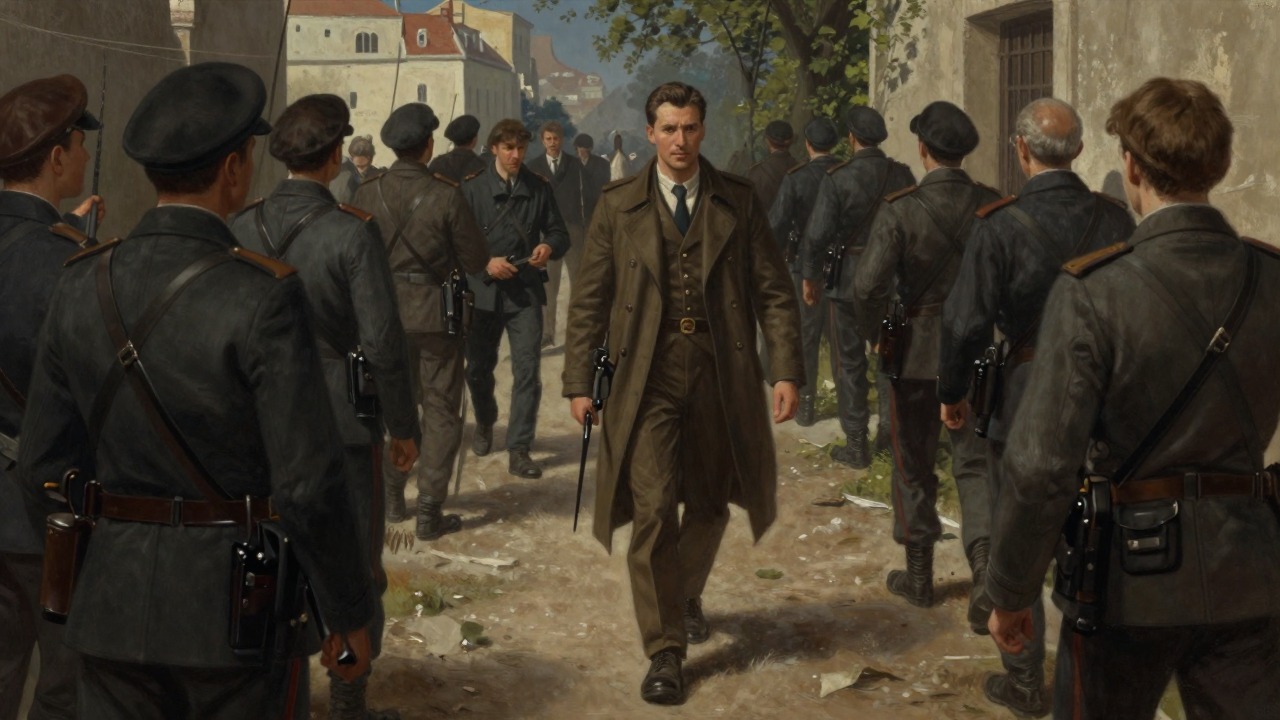
The coward's path
Avoiding combat
Clamence was mobilized but never saw action. He was in Paris when the Germans arrived. He considered the Resistance but found it too romantic and dangerous. He crossed into the Southern Zone and then to North Africa, intending to reach London, but ended up in Tunisia.
Arrest and internment
In Tunisia, a friend's arrest led to his own. He was interned near Tripoli, in a camp where the main trials were thirst, heat, and flies. He was not a hero; he was a passive participant.
The Election of the Pope
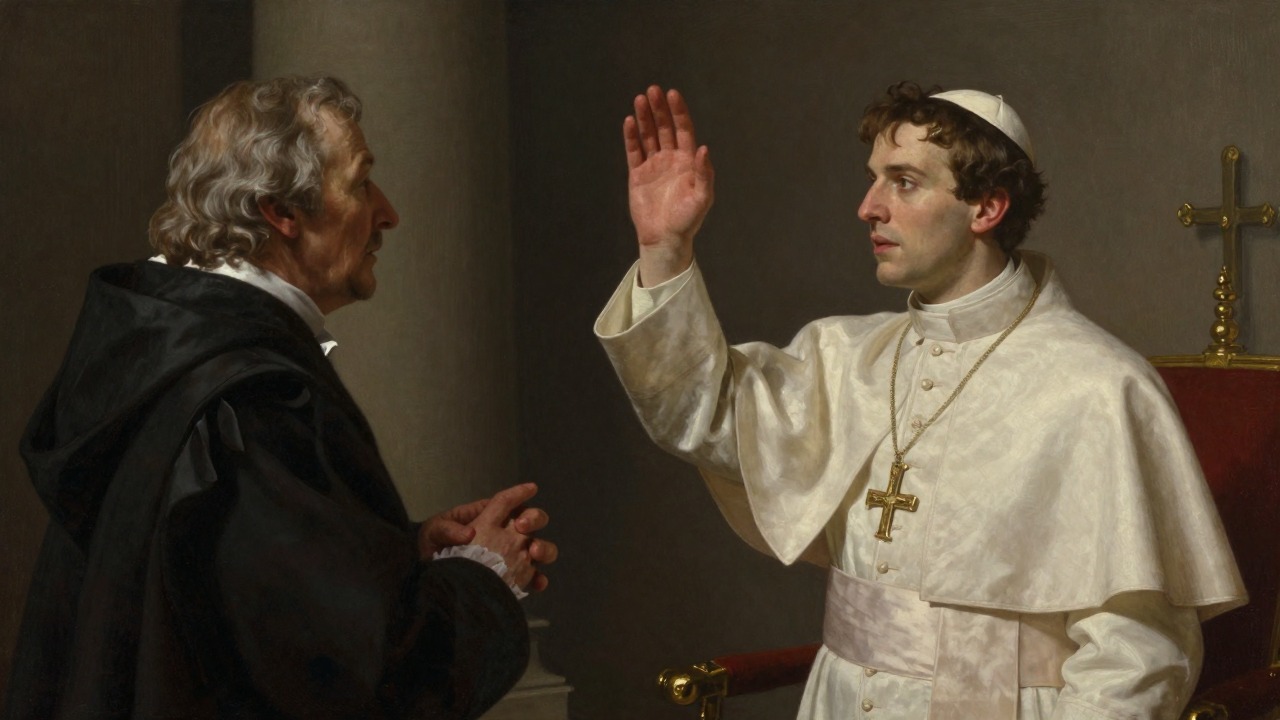
The mad prophet
Du Guesclin's proposal
A young Frenchman, Du Guesclin, a melancholic Catholic patriot, declared the need for a new pope who would live among the wretched. He proposed electing one from the prisoners, the one with the most failings. Clamence, as a joke, raised his hand, and was the only one. He was elected pope.
The seriousness of the joke
At first, the election was a game, but soon Clamence took it seriously. He became a group leader, doling out water rations, making decisions. He discovered that administration involved compromise and inequality. He began to favor some over others.
Drinking the Water
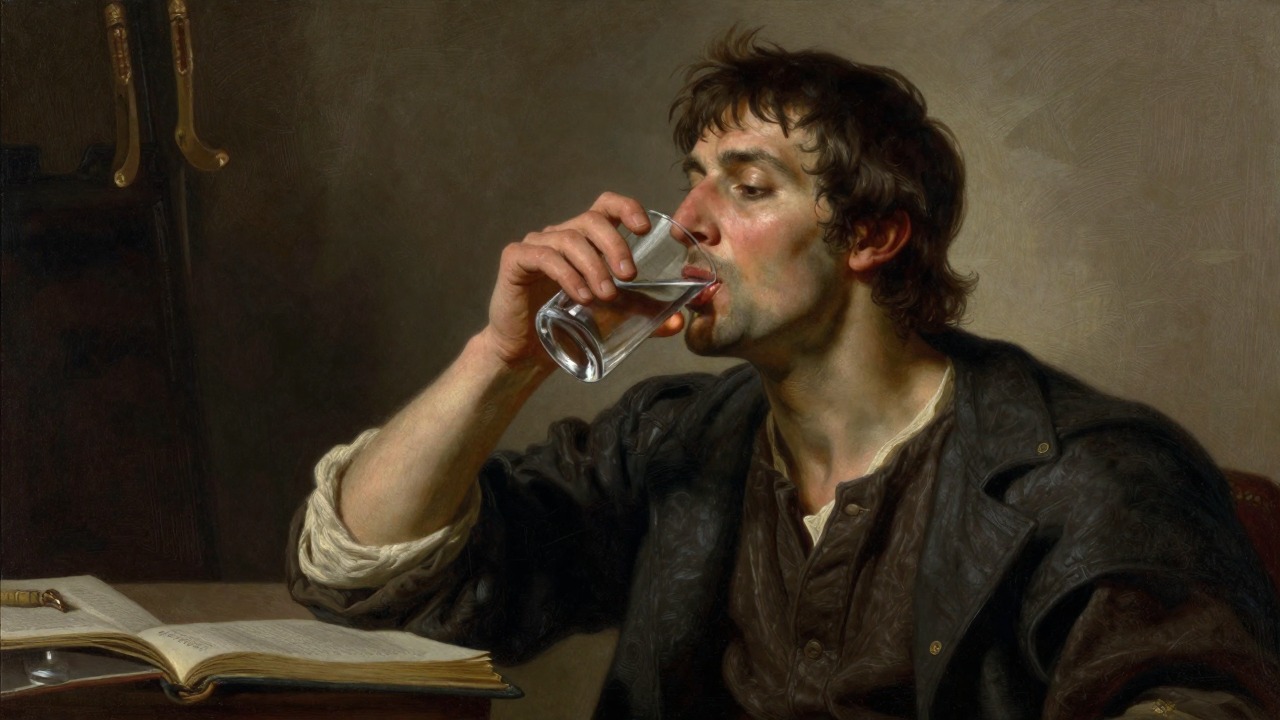
The ultimate transgression
A dying comrade's water
Clamence drank the water of a dying comrade, convincing himself that he was needed to lead and that the man was going to die anyway. This act crystallized his guilt. He had sacrificed another for his own survival.
The foundation of empires
He realized that empires and churches are born under the sun of death. His pontificate was built on such compromises. He later used this memory to justify his philosophy of universal guilt. The camp experience taught him that innocence is a luxury.
The End of the Pontificate
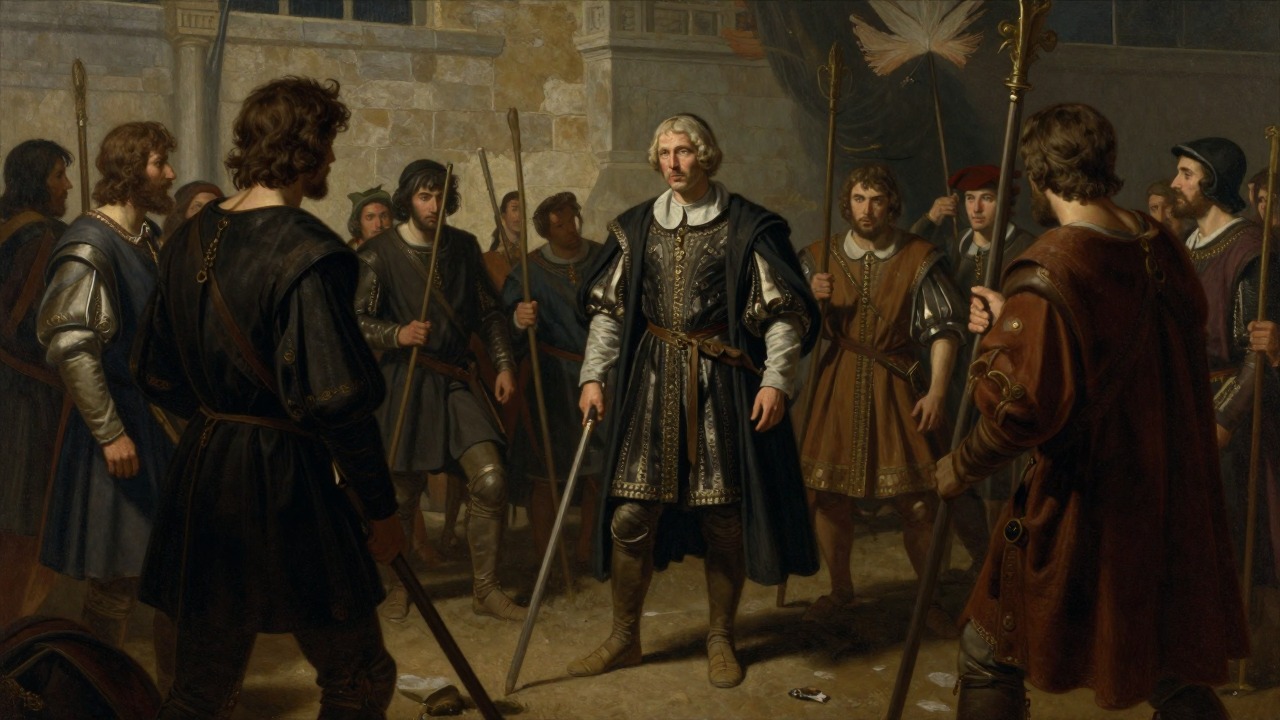
The burden of leadership
The death of Du Guesclin
Du Guesclin died, having stinted himself too much. Clamence loved him, or so he thought. The camp dissolved, and Clamence returned to the world, but he was transformed. He had tasted power and guilt. He knew that he was capable of anything.
The lesson learned
He later said that he learned to forgive the pope, because he needed it more than anyone. His own pontificate had shown him that authority corrupts. He closed the circle of his experience, using it to justify his later role as a judge-penitent.
During World War II, after the fall of France
After some time in the camp, under the African sun
Towards the end of the camp experience
After the camp, possibly liberated or transferred
